LED Strip Sample Order Plan Before a Bulk Purchase
Define the specific decision a sample must resolve before requesting it, then compare fit, light appearance and control against a recorded setup before approving a bulk order.
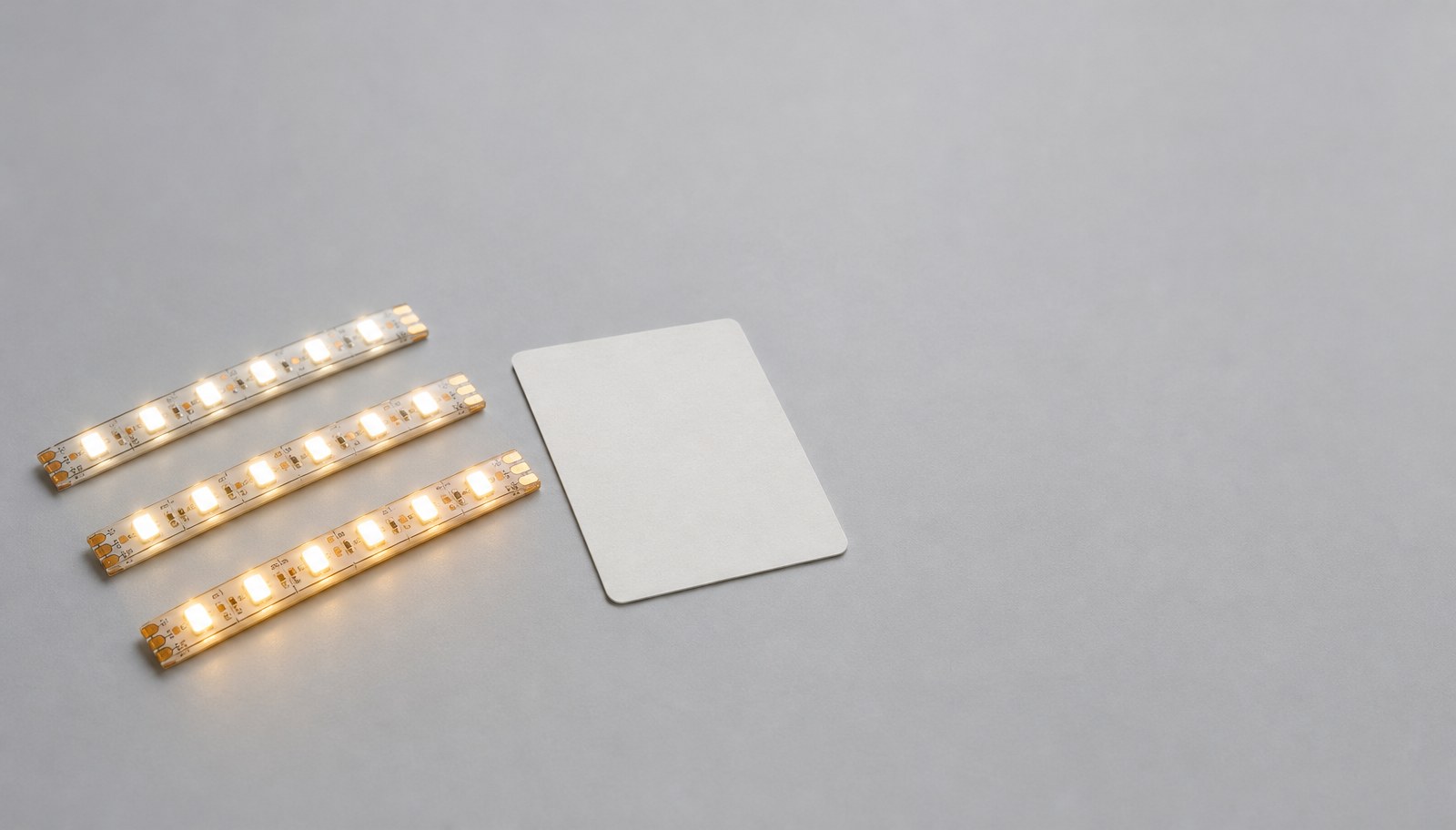
A sample order plan starts before the sample ever arrives. It defines exactly what decision the sample is meant to test, selects representative samples that actually cover that decision, records the comparison setup in advance, compares fit, light appearance and control against that setup, and ends with an explicit approve-or-revise decision before bulk order.
This guide is for procurement, quality and product teams planning a sample request ahead of a bulk LED strip order. For evaluating a sample once it has arrived, see the LED strip sample evaluation checklist; this article is the planning step before that evaluation. Review sample request options and ULANTU's ordering process before finalizing the plan.
Define the decision to test
State the specific decision the sample must resolve, before selecting which products to request.
Examples of a defined decision:
- "Confirm whether this strip's finished width clears our profile's internal channel."
- "Confirm whether the warm-white appearance matches our approved reference under our actual fixture."
- "Confirm whether the touch-dimming controller responds acceptably at our installed cable length."
A sample requested without a defined decision tends to be evaluated impressionistically — "it looks fine" — without actually answering the question that matters for the bulk order. Write the decision down before selecting products.
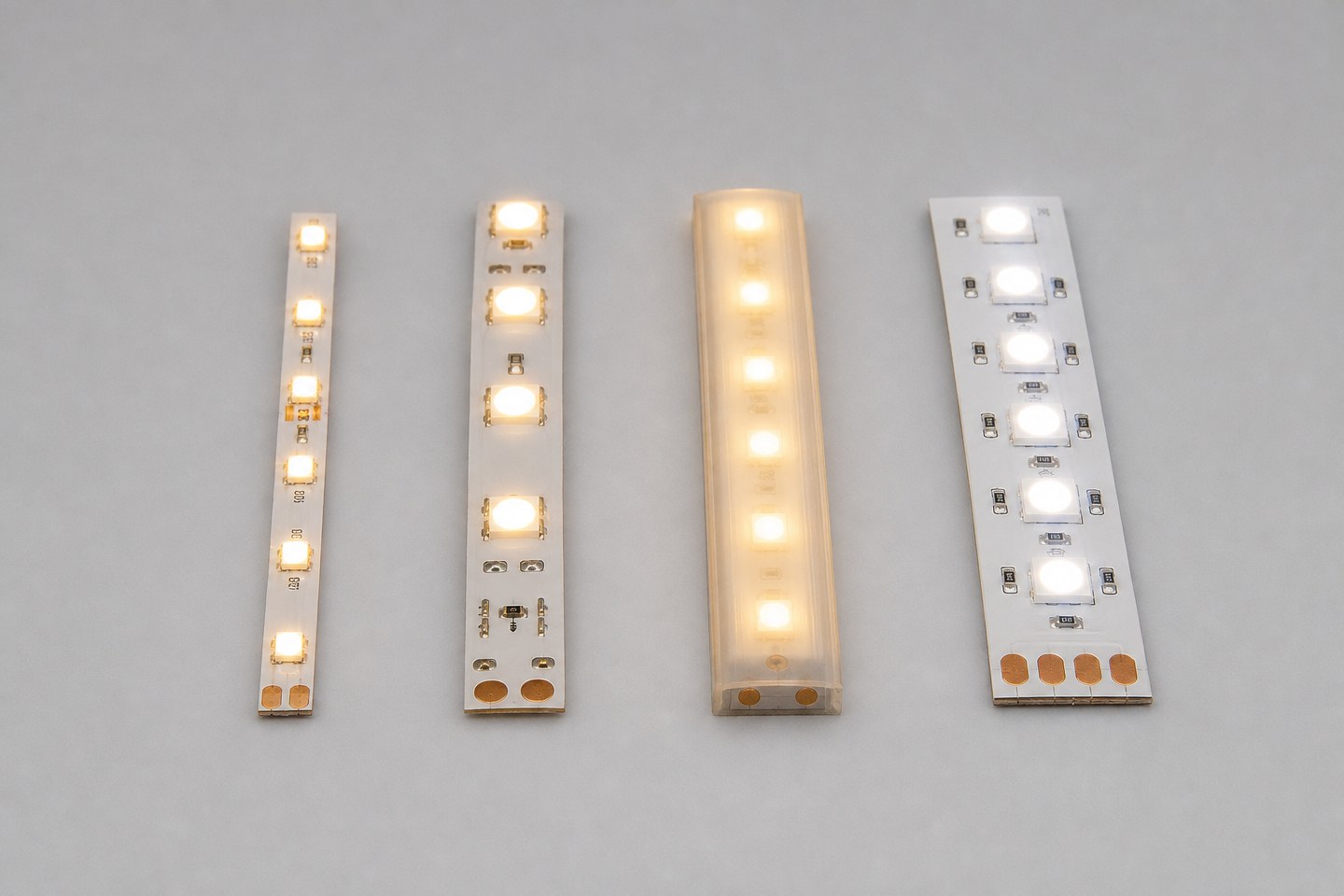
Select representative samples
Choose sample products and configurations that genuinely test the defined decision, not simply the easiest or cheapest option to obtain.
- If the decision concerns fit, request the sample in the exact length, width or configuration relevant to the installation — not a shorter or different-width convenience piece.
- If the decision concerns light appearance, request the sample in the exact color temperature or color target under evaluation, since adjacent CCT values can look meaningfully different.
- If the decision concerns control, request the sample with the actual controller or driver pairing intended for the bulk order, not a different control method that happens to be in stock.
- If more than one candidate is under consideration, request all candidates under the same evaluation conditions so the comparison is fair.
A sample selected without reference to the defined decision risks testing the wrong variable and producing a result that does not actually inform the bulk order.
Record the setup
Document the exact comparison conditions before the sample arrives, so the evaluation is repeatable and not dependent on memory.
| Setup element | What to record |
|---|---|
| Power condition | Voltage, driver, and any dimming setting used during evaluation |
| Viewing condition | Ambient light level, viewing distance, and time of day if daylight affects the result |
| Reference | The approved sample, drawing, or documented target being compared against |
| Physical mounting | How the sample is mounted or positioned for the fit and appearance check |
Recording the setup before the sample arrives means the same conditions can be reproduced for a second candidate, a later repeat order, or a different evaluator without re-deriving the method each time.
Compare fit, light and control
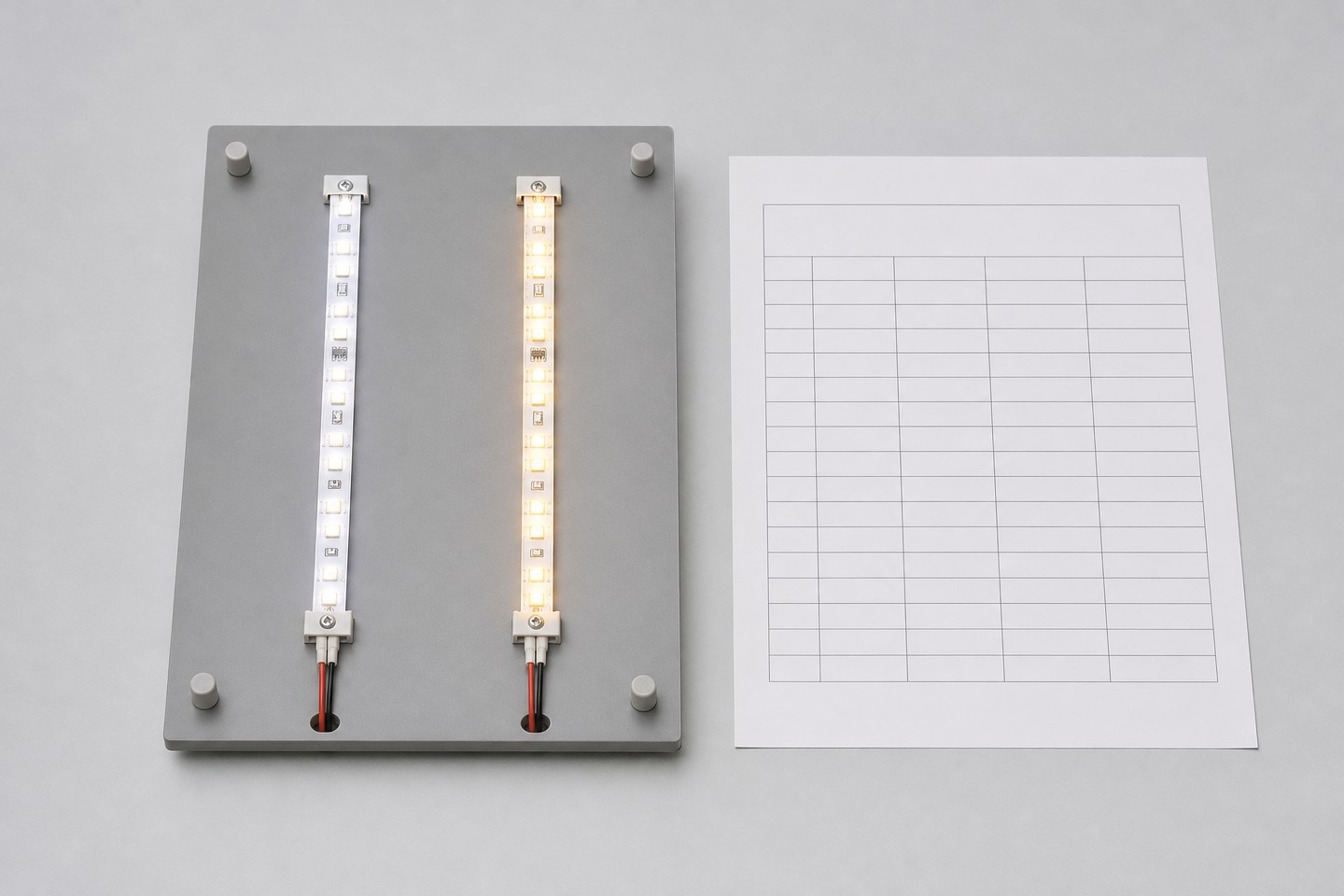
Run the comparison against the recorded setup and the defined decision, in that order.
- Fit: Check the sample against the dimensioned space, profile or mounting method it must physically fit. Record a clear pass, fail, or conditional result.
- Light appearance: Compare color, uniformity and optical result against the reference under the recorded viewing condition. Note any visible difference, even if it seems minor.
- Control function: Test the actual control method (switch, dimmer, sensor, addressable controller) under the recorded power condition. Confirm response, not just that it powers on.
- Combined result: Record whether the sample passes all three checks, or which specific check failed.
Avoid combining all three into one general "looks good" judgment. A sample that fits and lights correctly but fails the control check is not an overall pass.
Approve or revise before bulk order
Make an explicit decision from the comparison result, rather than defaulting to approval because no major issue was obvious.
- Approve: Record the approved sample's exact configuration and the decision it resolved, and reference that record when placing the bulk order.
- Revise: If any check failed or returned a conditional result, specify exactly what needs to change and request a revised sample against the same recorded setup.
- Reject: If the sample cannot meet the decision requirement, document why before moving to a different candidate.
Do not place a bulk order referencing a sample that was never formally approved against its defined decision. A verbal "it's probably fine" is not an approval record.
Replace vague requests with evaluable requirements
| Vague request | Why it causes rework | More evaluable wording |
|---|---|---|
| "Send a sample to check." | No defined decision for the sample to resolve | State the specific fit, light or control decision the sample must answer |
| "Compare it to what we had before." | No recorded setup for a repeatable comparison | Document power, viewing and mounting conditions before comparing |
| "Looks close enough." | Combines fit, light and control into one vague judgment | Record pass/fail separately for fit, light appearance and control function |
| "Go ahead and order." | No explicit approval record referencing the sample | Record the approved sample's exact configuration before placing the bulk order |
Plan for multiple evaluators
When more than one person will judge the sample — a procurement lead, a quality reviewer, an end client — plan for that before the sample arrives, not after conflicting opinions surface.
- Identify every evaluator who needs to sign off, and confirm each person's specific area of judgment (fit, light appearance, control function, or overall commercial fit) so their input is structured rather than a general impression.
- Share the recorded decision, representative sample selection and setup documentation with every evaluator in advance, so each person evaluates against the same defined criteria rather than forming an independent, unstated standard.
- If evaluators disagree, trace the disagreement back to a specific check (fit, light, or control) rather than treating it as a general difference of opinion — this usually reveals whether the setup was ambiguous or the sample genuinely failed a defined criterion.
- Record the final decision as a single approved outcome, even when it required reconciling multiple evaluators' input, so the bulk order references one clear approval rather than several partially-aligned opinions.
A sample plan built for a single evaluator often breaks down when a second reviewer is added later without the same defined decision and recorded setup — their informal impression competes with, rather than confirms, the original evaluation.
When the decision to test, representative sample selection, comparison setup and evaluator roles are defined, Request Sample Review. Include the decision the sample is meant to resolve, the exact configuration requested, and the comparison setup planned. The inquiry begins a sample-scope review for the stated requirement; exact sample terms and lead time are confirmed in that review, not by this guide.
Compare matching products.

5V USB 5050 RGB Strip Kits with 24-Key IR or Bluetooth Control
RGB TV and desktop backlighting kits in 1–5m lengths, with either infrared-only or infrared-plus-Bluetooth control.
ULT-10028D01 · 10 configurationsRequest a quoteReference priceView product
5 V COB Strip Kits with Touch USB Lead or Standard USB Cable
COB strips offer 5 m touch-controlled white-light sets and a separate 2 m warm-white configuration with a 1 m USB cable.
ULT-94A29C3E · 4 configurationsFrom USD 1.66 for this configurationReference priceView product
5V Battery-Powered Flexible Neon Strip
A flexible 5V neon strip kit supplied with a battery box, offered in fixed colors and 1–5 m lengths for portable decorative lighting.
ULT-60FE02CE · 55 configurationsFrom USD 2.23 / setReference priceView product
220V 2835 Convex Double-Row LED Strip, 120 LEDs/m
Encapsulated diagonal double-row strip in warm white or white, with a separate solderless connector option.
ULT-95AD0788 · 3 configurationsFrom USD 1.06 for this configurationReference priceView productBring the comparison into a project brief.
Share the documented requirements and unresolved questions. An inquiry begins review; it does not confirm engineering approval, compatibility, stock, price, lead time, compliance or an order.
Prepare a project brief