Rigid LED Light Bar Sourcing Checklist for Cabinets and Displays
After rigid is selected over flexible, define the exact fixture use, record dimensioned measurements, and specify light, diffusion, switching and connection before requesting samples.
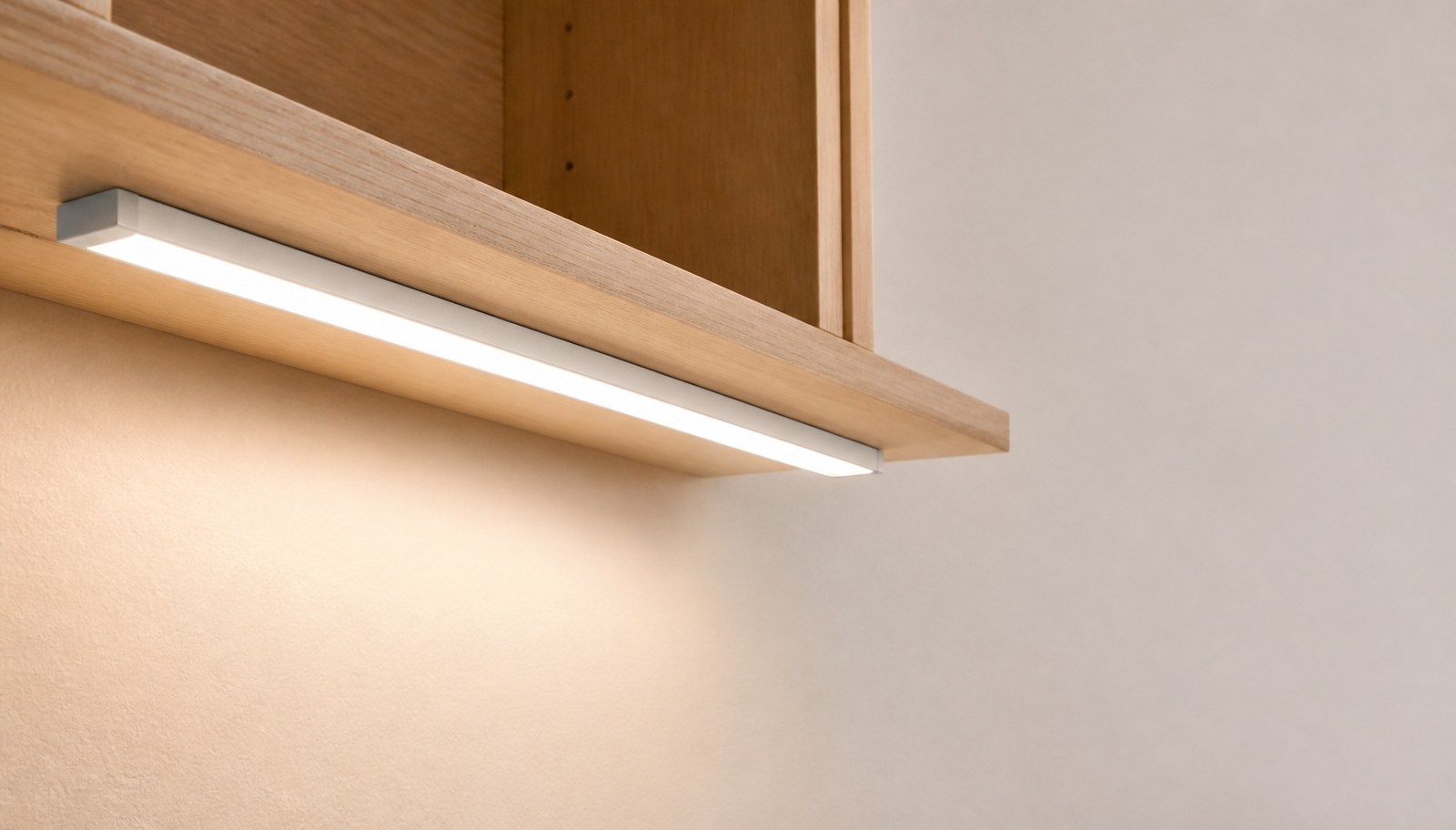
Sourcing a rigid LED light bar for cabinets or displays starts after the rigid-versus-flexible decision is already made. The task here is narrower: define the furniture or display use, record exact dimensions, select the light and diffusion result needed, add the correct switching and connection method, and request samples against that defined scope.
This guide is for cabinet makers, display makers and distributors preparing a rigid-bar RFQ. If the rigid-versus-flexible format is still undecided, see Rigid LED Bar vs Flexible LED Strip first. Review the rigid and linear lighting category and the retail and display lighting application before finalizing a request.
Define the furniture or display use
State the application precisely enough that a supplier can propose a matching bar length, mounting method and finish, rather than a generic linear light.
Record:
- fixture type (cabinet shelf edge, display case perimeter, under-counter, toe-kick, vertical accent);
- viewing condition (visible bar, concealed behind a lip or fascia, direct view through glass);
- finish requirements for any visible housing (color, material, surface treatment);
- expected duty cycle (continuously on during open hours, switched, or infrequent).
A use case stated only as "cabinet lighting" leaves length, mounting and finish undefined. Name the specific fixture and viewing condition first.
Record dimensions
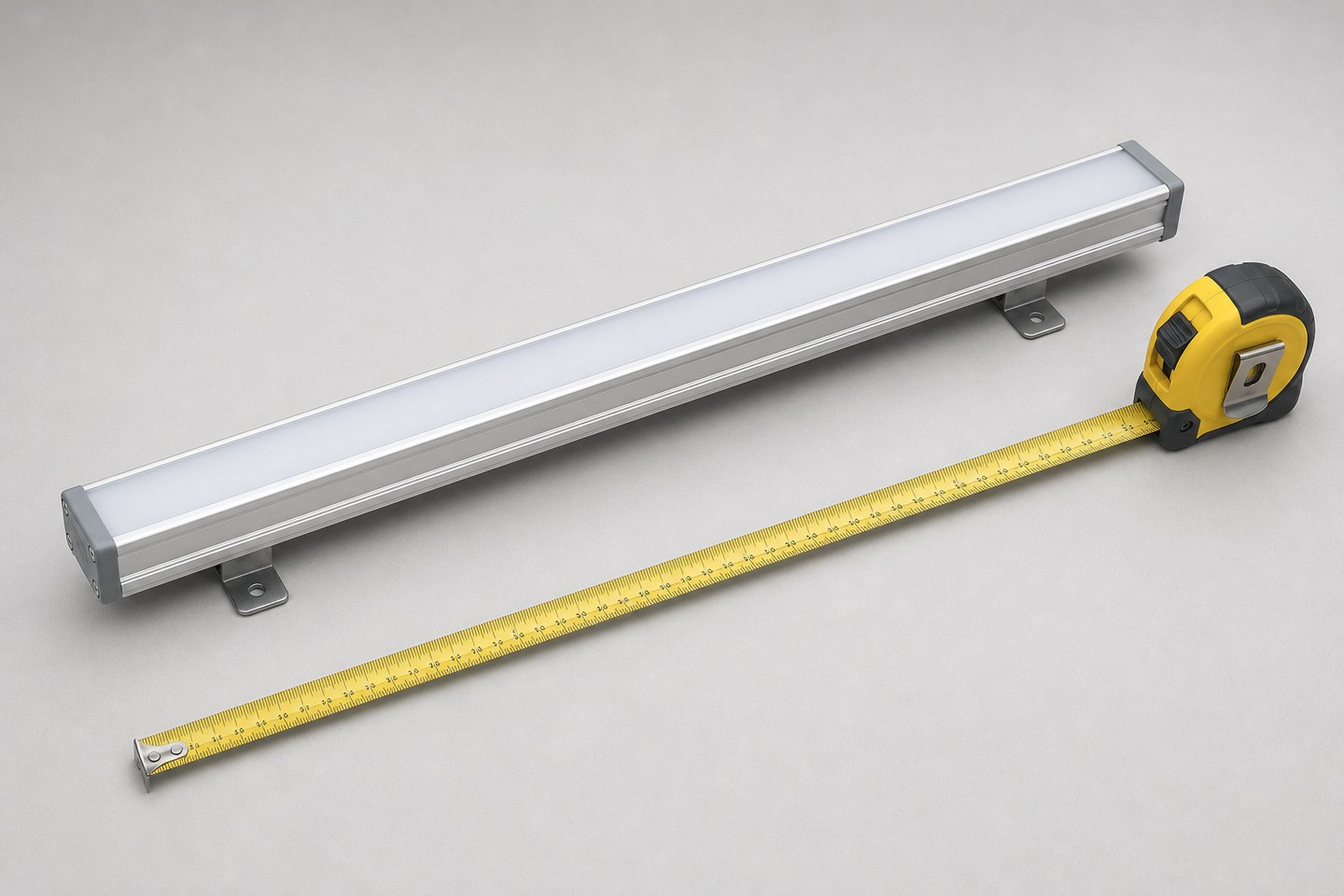
Provide dimensioned measurements for the exact fixture, not an approximate or rounded figure.
- Total available mounting length and any obstruction (hinges, brackets, corner returns) within that length.
- Mounting channel or recess depth and width, if the bar must fit a defined profile or cutout.
- End-to-end connection points if multiple bars will join to cover one continuous run.
- Clearance behind the mounting surface for the bar body, driver location and cable routing.
Submit these as a dimensioned sketch or drawing wherever possible. A verbal length estimate without a drawing is a common source of a bar that is cut to the wrong length or does not clear an obstruction.
Select the light and diffusion need
Define what the bar needs to produce at the viewing surface, not just a color temperature label.
| Requirement | What to specify | Why it matters |
|---|---|---|
| Light color | Target color temperature or text label (warm/neutral/cool white), confirmed against the exact product data | Determines the correct SKU, not an assumed equivalent |
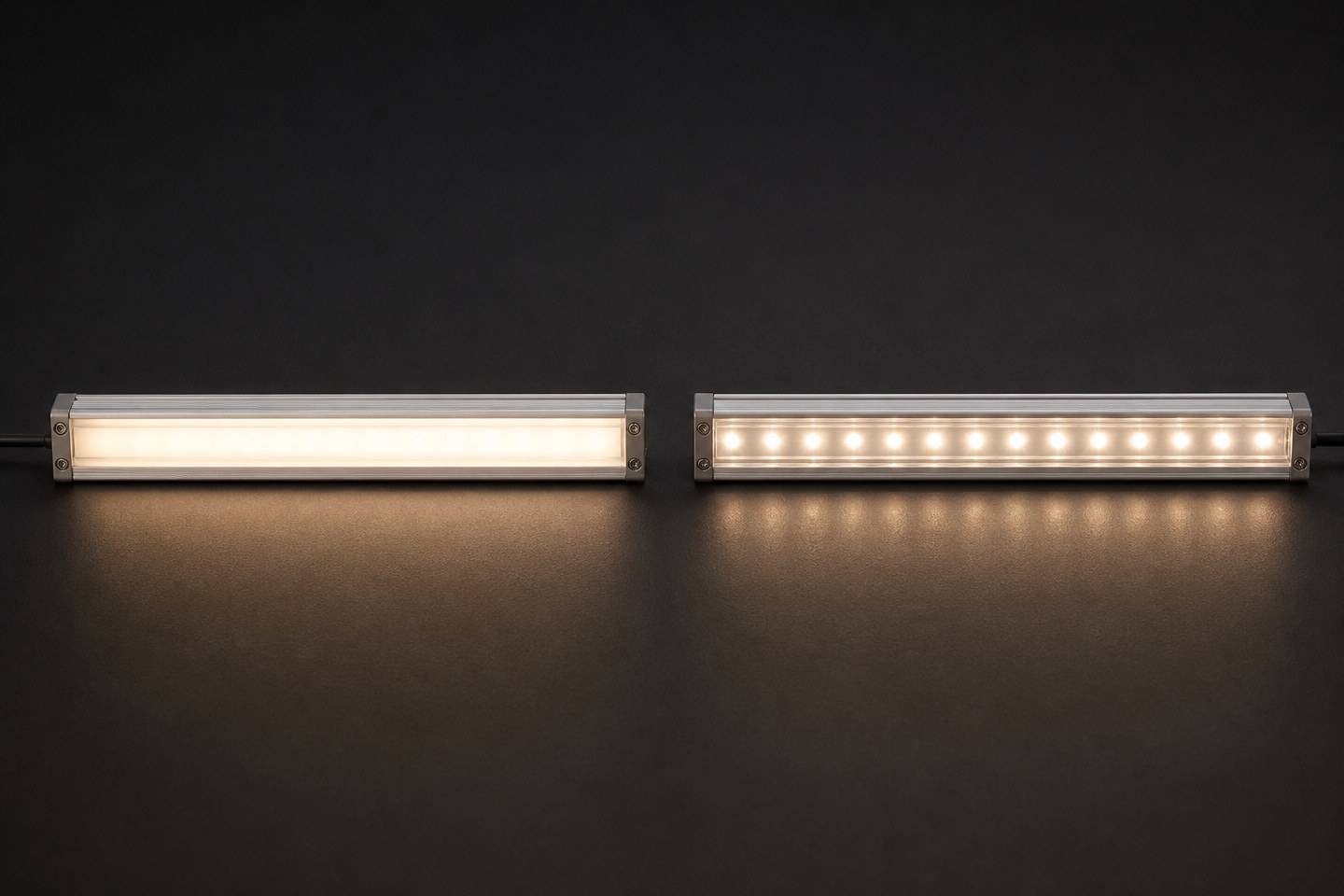
| Diffusion | Whether a diffused lens is required to hide individual LED points at the viewing distance | Point-source visibility depends on distance and diffuser type, not brightness alone |
| Beam direction | Direct-view, indirect/wall-wash, or edge-lit through a diffuser panel | Changes the mounting orientation and bar type needed |
| Uniformity | Whether color and intensity must be matched across multiple bars in one visible run | Requires confirming batch or lot matching with the supplier before ordering |
Do not assume a stated color temperature guarantees visual uniformity across bars from different production runs without separately confirming that with the supplier.
Add switching and connection
Specify how the bar will be powered, switched and connected to neighboring bars or to the driver.
- Power input type and voltage, matched to the available driver or the driver being sourced alongside the bars.
- Switching method (wall switch, door/motion sensor, dimmer) and whether it is supplier-provided or buyer-integrated.
- Connector type between bar sections and between the bar and the driver lead.
- Any requirement for field-cuttable sections versus fixed-length bars only.
Confirm switching compatibility with the exact bar and driver combination before finalizing the order — a sensor or dimmer that is not confirmed compatible with the selected driver can produce flicker or failure to dim correctly.
Request samples and options
Request a sample against the defined scope above, not a generic "see what you have" sample.
- Ask for the sample in the confirmed length, finish, light color and diffusion option.
- Request any available option variants (finish, diffusion type, switching accessory) relevant to the final decision.
- Confirm current price, pack unit and lead time for the sample quantity and the anticipated bulk quantity separately.
- Record the sample evaluation result (fit, light appearance, switching function) against the defined fixture before approving bulk production.
A sample requested without the defined use case, dimensions and light/diffusion requirement above risks evaluating the wrong configuration.
Replace vague requests with evaluable requirements
| Vague request | Why it causes rework | More evaluable wording |
|---|---|---|
| "Cabinet light bar." | No fixture type, length or mounting data | Name the exact fixture, viewing condition and dimensioned mounting space |
| "Bright, even light." | No defined diffusion or uniformity requirement | Specify diffuser need, viewing distance and cross-bar uniformity requirement |
| "Standard connector." | Connector type and driver pairing undefined | Confirm bar-to-bar and bar-to-driver connector type against the selected driver |
| "Send a sample." | Scope of the sample is undefined | Request the sample in the confirmed length, finish, light color and diffusion option |
Confirm distribution and warranty expectations
Before finalizing the order, confirm two commercial items that are easy to overlook in a technical-only review.
- Distribution pattern: Ask whether the bar's light output is specified as a total figure or per-metre, and whether any published figure represents a single bar or an assembled multi-bar run. A per-bar figure does not automatically describe the result of several bars joined end-to-end.
- Field cutting: If the installation may need a non-standard length, confirm whether the bar supports field cutting at marked points, or whether only factory-cut lengths are available. Cutting outside a marked point can void the usable circuit on some rigid formats.
- Warranty scope: Confirm what the standard warranty covers for the exact bar and driver combination being ordered, and whether that scope changes if a different brand driver is substituted later.
Keep these three answers in the same record as the dimensional and optical requirements, so the full purchasing decision is documented in one place rather than split between a technical brief and a separate commercial email.
Confirm installation and service access
Plan how the bar is installed and whether it will ever need to be accessed again, since a cabinet or display fixture can make later access difficult once assembled.
- Confirm the mounting method (clip, track, adhesive, screw) matches both the cabinet material and the planned finish schedule, so mounting hardware is not selected after the cabinet is already built.
- If the installation is expected to need future service (bulb-era replacement habits do not apply directly, but a driver or connector may still need replacement), confirm an access point is preserved rather than permanently sealed.
- Record the planned mounting method and any access requirement in the same brief as the dimensional and electrical specification, so the installer and the product supplier are working from one consistent plan.
When the fixture use, dimensions, light/diffusion requirement, switching method and distribution/warranty expectations are defined, Request Stock & Price Review. Include the fixture type and dimensions, light color and diffusion need, switching and connection requirement, and sample quantity. The inquiry begins a product-fit review for the stated scope; exact SKU availability, pricing and lead time are confirmed in that review, not by this guide.
Bring the comparison into a project brief.
Share the documented requirements and unresolved questions. An inquiry begins review; it does not confirm engineering approval, compatibility, stock, price, lead time, compliance or an order.
Prepare a project brief