Writing an OEM LED Strip Brief: Inputs a Supplier Needs
Define the base product, controlled changes, acceptance evidence, labels, packaging, documents and release conditions in one reviewable OEM brief.
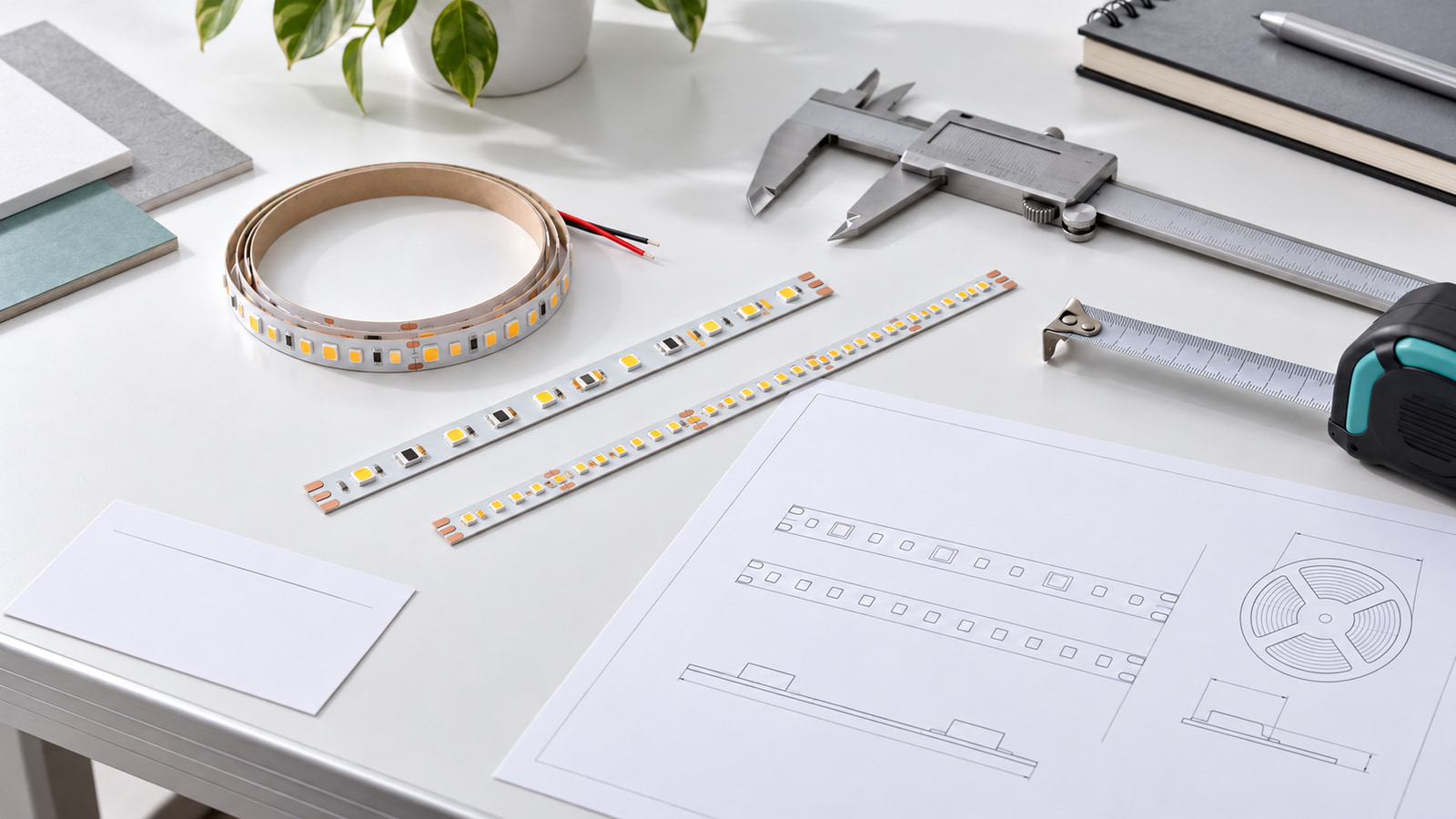
An OEM LED strip specification brief should identify the base product or reference sample, the requirements that must remain unchanged, every requested change, the application and destination market, the acceptance method for each changed characteristic, label and packaging instructions, required documents, sample sign-off conditions, quantity, and planned timing. Separating these inputs prevents a packaging request, visual reference, or broad request for a “custom strip” from being mistaken for a complete technical specification.
This guide is for lighting brands and OEM procurement teams preparing a supplier inquiry. Review the OEM and ODM service context and the lighting-brand project path, then use this OEM LED strip specification brief to define a reviewable scope. It is a procurement method, not a promise that every requested change is feasible or available.
Anchor the brief to a base product or reference sample
Start with the closest known product. A base can be an exact current model, a supplier datasheet with revision, an approved sample with an identification label, or a buyer-owned reference sample accompanied by measured and documented requirements.
Record:
- supplier and exact model or internal reference ID;
- datasheet or drawing revision;
- sample identification and date received;
- construction, dimensions, electrical input, optical appearance, connection, and protection details already accepted;
- application and installation conditions used for the reference;
- destination market and required project documents;
- which characteristics are intentionally inherited from the base.
Photographs alone are not a complete base specification. They may show appearance, connector orientation, markings, or packaging, but they do not establish hidden construction, electrical ratings, material composition, measured light output, protection scope, or applicable certification.
If no exact base product exists, state that the supplier must first propose a candidate from the application and dimensional envelope. Keep all unverified values as open procurement inputs. Do not convert a similar-looking sample into an assumed technical match.
Separate what stays from what changes
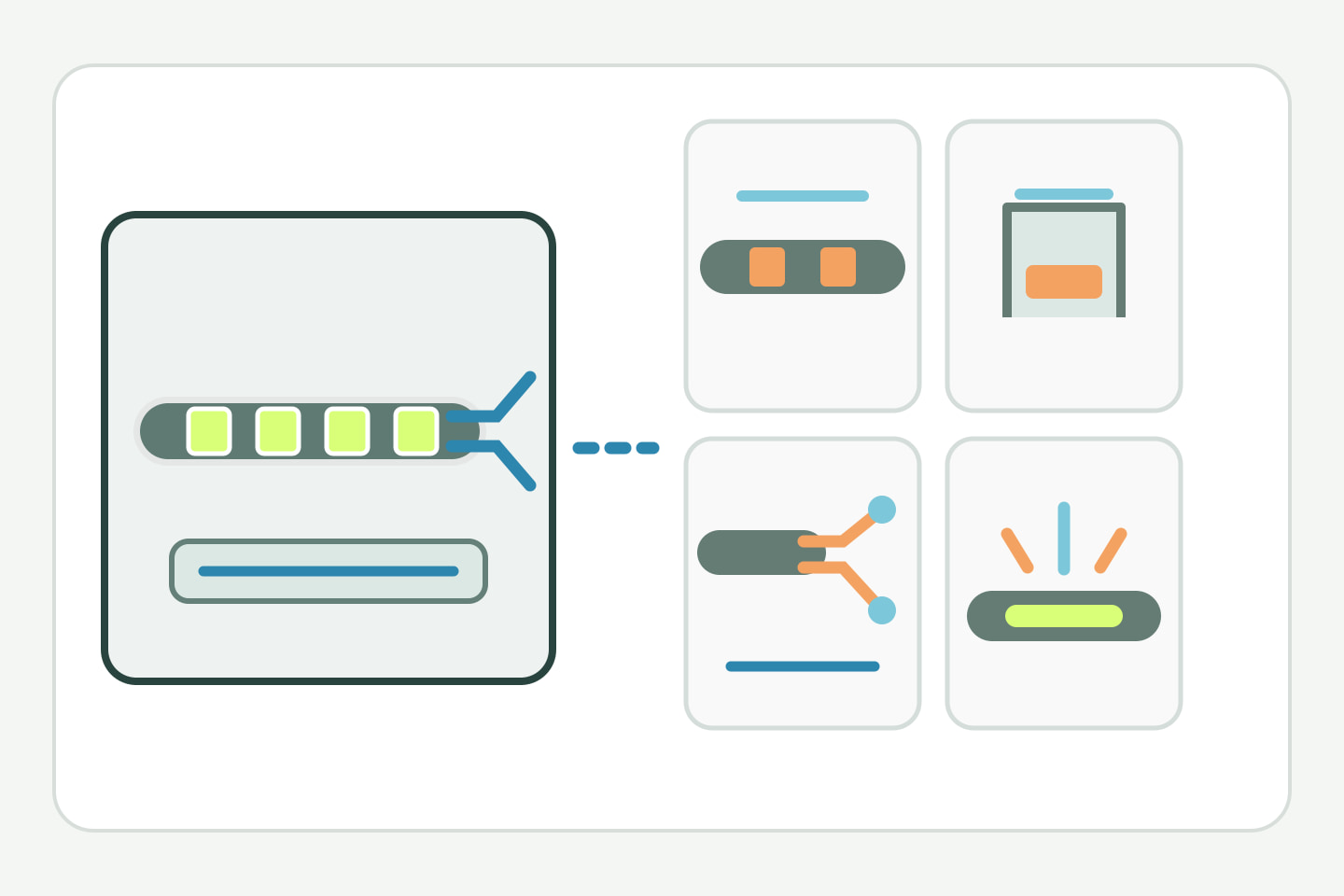
Use a change table before asking for a quotation or sample. It prevents an unchanged characteristic from being lost when one nearby feature is modified.
| Requirement area | Keep from the base | Requested change | Buyer evidence or acceptance method | Supplier response required |
|---|---|---|---|---|
| Appearance | Identify retained strip width, surface finish, jacket appearance, and visible construction | Describe only the intended visible change | Approved reference sample, controlled visual comparison, or dimensioned drawing | Feasibility, affected materials or tooling, and sample proposal |
| Mechanical construction | Identify retained substrate, profile fit, cut arrangement, and mounting method where known | State target envelope, bend or routing need, termination, or mounting change | Drawing with dimensions and fit check | Proposed construction, tolerances for review, and constraints |
| Electrical | Identify retained input, circuit concept, power connection, and control role from the exact base record | State the required change in input, load, channel arrangement, cable, connector, or polarity | Applicable drawing, setup record, and agreed measurement method | Candidate ratings, wiring, compatibility conditions, and documents |
| Optical | Identify retained light appearance, emitting direction, and approved viewing condition | State the desired change in white-light, color, distribution, or visible uniformity | Defined sample setup, comparison condition, and agreed measurement record | Candidate optical data and sample conditions |
| Connection | Identify retained lead, connector, feed position, and end treatment | State cable length, connector family, feed direction, pin order, marking, or termination change | Dimensioned connection drawing and mating-part information | Exact connection proposal, ownership boundary, and assembly constraints |
Write one change per line. If the buyer wants a different connector but all optical and strip-construction requirements should remain as the base, state that explicitly. If one requested change may affect another characteristic, require the supplier to identify the dependency before sample production.
Avoid using “same as sample except improved” as a specification. “Improved” has no acceptance boundary. Name the characteristic, the reference condition, and how buyer and supplier will decide whether the result is acceptable.
Define specifications and acceptance without guessing
The buyer should provide target values only when they come from an application requirement, approved drawing, applicable document, or verified base record. Do not invent dimensions, tolerances, output, lifetime, environmental ratings, or certification scope to make a brief look complete.
For each specified characteristic, record four items:
- Requirement: what the product must do or fit.
- Condition: the configuration and environment in which it applies.
- Method: the drawing, measurement, document review, fit check, or controlled sample comparison used to evaluate it.
- Acceptance record: the result and revision that buyer and supplier will sign off.
For example, replace “must fit our profile” with a dimensioned profile section, available internal envelope, insertion method, end-cap and cable clearances, and the physical fit check required on the sample. Replace “bright and uniform” with the actual application, diffuser and viewing condition, the representative sample length, the comparison setup, and the agreed visual or measured criteria.
If a requirement depends on an exact model, controller, driver, connector, mounting accessory, or installation method, list that dependency. Ask the supplier to confirm the full candidate combination from current documentation and the representative sample. A family name or marketing description is not enough to prove compatibility.
Keep the application environment specific. State indoor, damp, exposed, enclosed, heated, frequently cleaned, or otherwise relevant conditions and describe the complete assembly boundary. A component-level protection statement does not automatically cover cut ends, cables, connectors, joints, enclosures, or field workmanship.
Keep labels, packaging, and documents separate
Labels and packaging are part of the commercial specification, but they do not replace the product specification. Create separate sections so a carton mark or label artwork cannot be mistaken for evidence that the product itself meets the technical requirement.
Product and carton labels
Provide required text, languages, branding, placement, dimensions, barcode or internal reference, variable data, and artwork ownership. Identify which information must come from the approved product record and which is buyer-provided. Do not ask a supplier to place unsupported certification marks or claims on a label.
Packaging
Describe unit length or quantity, reel or inner-pack expectation, protective needs, bag or box arrangement, carton information, destination handling, and any retailer or warehouse constraints. State whether the packaging will be evaluated for fit, identification, appearance, handling, or another defined purpose.
Required documents
List each document by purpose and product scope, such as a dimensioned drawing, connection drawing, datasheet, label proof, packaging specification, inspection record, or market-specific document for the exact candidate. Do not request “all certificates” without naming the destination, product, model scope, and document needed.
Keep document revision control visible. A drawing used for the first sample must not silently remain the release reference after the connector, cable, marking, or packaging changes.
Control samples, changes, and release decisions
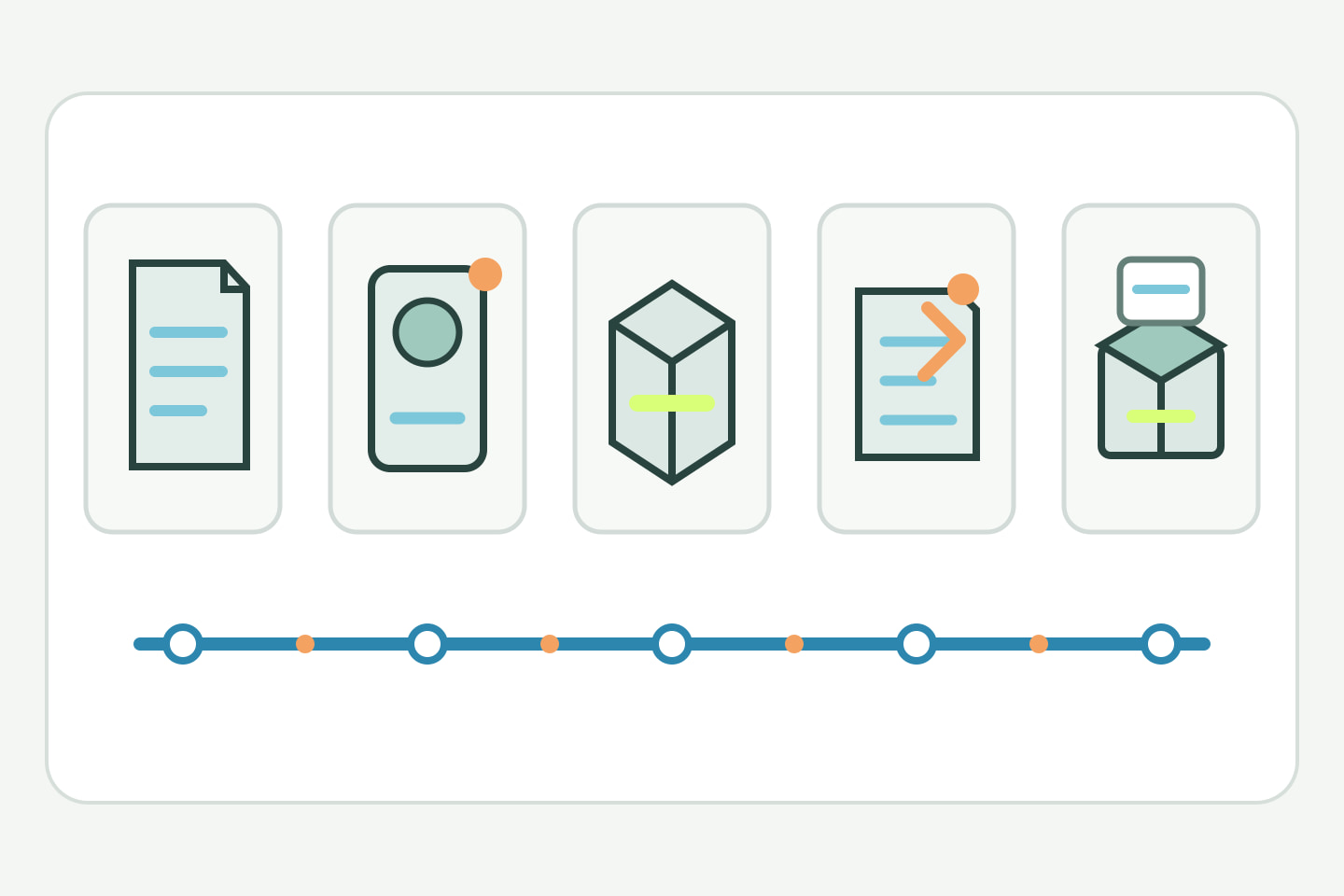
The following workflow is a procurement recommendation, not a statement of ULANTU’s internal operating procedure or a promise about sampling terms.
- Brief issue: Buyer sends the base record, change table, application, quantities, timing, documents, and acceptance methods under one revision.
- Supplier review: Supplier identifies feasible items, dependencies, open conditions, affected documents, and the proposed sample scope.
- Sample definition: Both sides record exactly what the sample represents, including any temporary material, process, packaging, or document differences.
- Sample evaluation: Buyer evaluates the sample using the agreed conditions and records pass, fail, or revision-required by characteristic.
- Change record: Every accepted change receives a new brief, drawing, or sample revision. Verbal instructions are transferred into the controlled record.
- Release review: Buyer confirms the approved product specification, connection, label, packaging, documents, quantity, and applicable acceptance evidence before authorizing bulk production.
Do not use one general “sample approved” message when the sample includes several change areas. A visual approval does not necessarily approve electrical construction, labeling, packaging, documents, or a destination-market requirement. Record the decision for each relevant section.
If a later change affects the approved sample, identify whether a new full sample, a partial verification sample, a document-only review, or another agreed check is required. The parties should make that decision from the effect of the change, not from how small the wording change appears.
Complete the OEM requirement checklist
Copy the following structure into the inquiry. Each row requests information that can be reviewed without filling the brief with invented values.
| Brief section | Buyer information to provide | Supplier response required |
|---|---|---|
| Project identity | Buyer project ID, brief revision, contact role, destination market, and application | Confirm receipt, responsible contact, and review revision |
| Base product | Exact model, datasheet/drawing revision, reference sample ID, and characteristics to retain | Confirm base availability for review and any differences from the supplied reference |
| Application environment | Installation geometry, operating condition, exposure, mounting, control, cleaning, and service context | Identify candidate limits, dependencies, and information still required |
| Specified changes | One line per appearance, mechanical, electrical, optical, or connection change | State feasibility, affected characteristics, proposed construction, and constraints |
| Acceptance methods | Required drawing checks, measurements, fit checks, visual comparisons, sample setup, and decision record | Propose applicable evidence and confirm the sample configuration |
| Labels | Text, language, artwork, placement, size, variable data, and marking restrictions | Provide label proof and identify product-derived data |
| Packaging | Unit pack, protection, identification, carton, handling, and destination needs | Provide packaging proposal and sample/proof scope |
| Documents | Exact drawings, datasheets, inspection records, label proofs, packaging files, and market documents needed | State available document type, model scope, revision, and delivery stage |
| Quantity | Expected sample quantity and indicative bulk quantity by configuration | State quotation basis and any scope dependency without assuming an MOQ |
| Planned timing | Target dates for review, sample evaluation, decision, and intended production need | Provide a project-specific schedule proposal without assuming a standard lead time |
| Release conditions | Approved revisions, required sample result, document completion, and buyer authorization | Confirm the release package and remaining exclusions |
The checklist deliberately separates quantity from an assumed minimum order and timing from a promised lead time. Those commercial terms must be confirmed for the reviewed scope.
Replace vague requests with evaluable requirements
| Vague request | Why it causes rework | More evaluable wording |
|---|---|---|
| “Make it brighter.” | No reference, condition, or acceptance method | Identify the application, base sample, operating condition, requested change, and agreed comparison or measurement method |
| “Use the same quality as this photo.” | A photo cannot establish hidden construction or measured performance | Identify the exact reference sample and list the specific visible and technical characteristics to retain |
| “Custom waterproof strip.” | The exposure and complete-system boundary are undefined | Describe installation, water or cleaning exposure, mounting direction, cuts, ends, connectors, cable entries, service method, and required evidence |
| “Our usual connector.” | Connector identity, pin order, dimensions, and mating part are missing | Provide the connector specification, mating part, pinout, orientation, cable, length, and drawing |
| “Retail packaging with all certificates.” | Packaging, market, product scope, and documents are mixed together | Define packaging separately, then list each required document by destination, exact model, purpose, and revision |
| “Approve the sample and start production.” | Approval scope and release conditions are unclear | Record results by change area, close revisions, approve labels/packaging/documents, and issue a separate bulk-release authorization |
Use direct descriptions and attach the evidence that makes them reviewable. This reduces repeated quotation and sampling questions without pretending that every requested customization, document, schedule, or commercial term is already available.
When the base record and change table are ready, Submit an OEM Requirement Brief. Include the base model or reference sample, application and destination market, exact change scope, acceptance methods, label and packaging requirements, required documents, quantities, and planned timing. The inquiry begins a feasibility and scope review; it does not confirm customization capability, MOQ, price, sample policy, lead time, certification, production release, or an order.
Bring the comparison into a project brief.
Share the documented requirements and unresolved questions. An inquiry begins review; it does not confirm engineering approval, compatibility, stock, price, lead time, compliance or an order.
Prepare a project brief