LED Strip Failure Investigation Before a Warranty Request
Build a neutral, complete evidence pack by isolating the symptom, recording product identity and setup, and documenting environment and changes without stating an unverified cause.
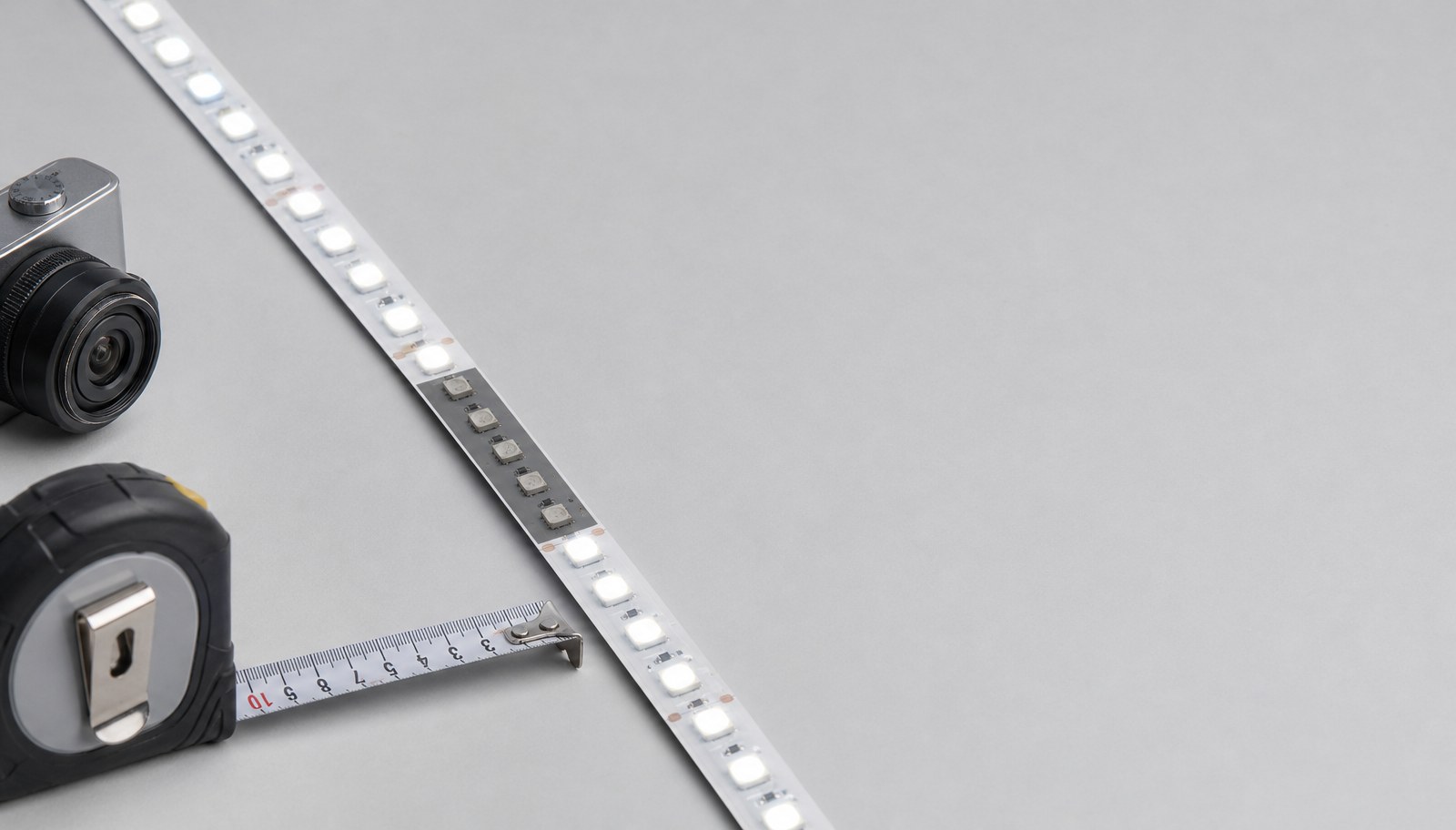
A failure investigation before a warranty request has five steps, in order: isolate the symptom and its scope, record the exact product identity, document the power and control setup, record the environment and any recent changes, and submit the assembled evidence without stating an unverified root cause. The goal is a neutral, complete evidence pack — not a diagnosis.
This guide is for contractors, quality teams and distributors investigating a reported LED strip issue before submitting a warranty request. Review ULANTU's warranty and support information and quality framework before submitting a request. This is an evidence-gathering method; it does not determine warranty eligibility, root cause, or coverage for any specific case — those are confirmed through the warranty review itself.
Isolate the symptom and scope
Describe exactly what is observed, and exactly how much of the installation is affected, before drawing any conclusion about cause.
Record:
- the precise symptom (no light, partial section dark, flickering, color shift, physical damage) — described observationally, not interpreted;
- whether the symptom affects one section, one zone, or the entire run;
- whether the symptom is constant, intermittent, or triggered by a specific condition (power-on, dimming, time of day, temperature);
- when the symptom was first observed and by whom.
Avoid skipping straight to a cause ("the driver failed") before the symptom itself is precisely recorded. A precise symptom description is more useful to a warranty review than an early guess at cause.
Record product identity
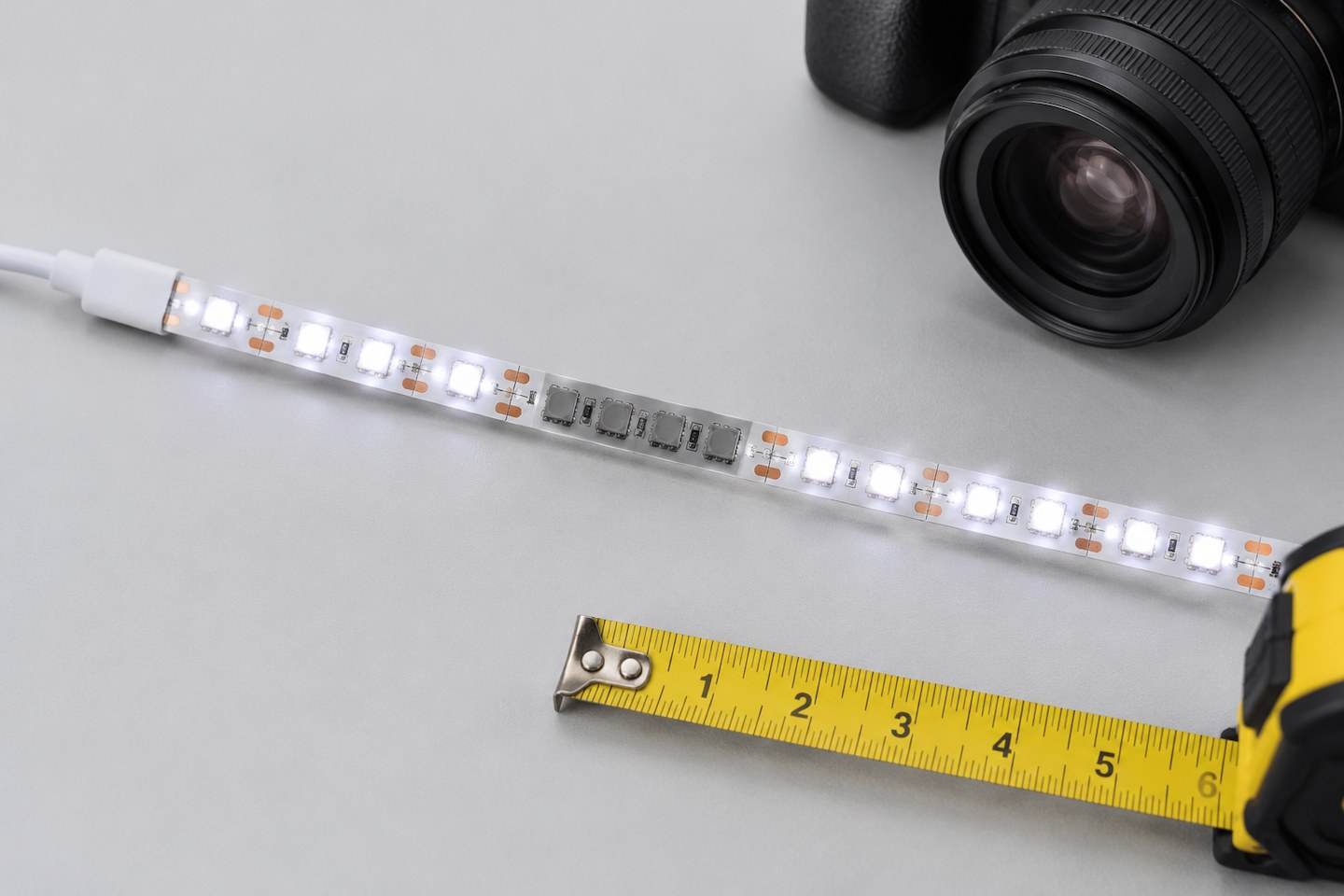
Identify the exact product involved, using the installed-identity record if one exists from handover or maintenance documentation.
- Exact model and configuration of the affected strip, driver and controller.
- Batch or lot reference, if available from installation or maintenance records.
- Installation date and, if known, the purchase order or order reference.
- Quantity of product affected versus quantity installed from the same batch, if relevant to the symptom's scope.
A warranty request submitted without the exact product identity and batch reference is difficult to evaluate, and may delay the review while that information is requested separately.
Document power and control setup
Record the actual electrical conditions the affected section was operating under, since many reported symptoms depend on the power and control configuration.
| Element | What to record |
|---|---|
| Power source | Driver model, measured or rated output voltage, and whether it is shared with other loads |
| Control method | Controller type, dimming or control setting active when the symptom occurred |
| Wiring | Cable length and any extension or splice between the power source and the affected section |
| Recent changes | Any recent change to the driver, controller, wiring, or load on the same circuit |
Document this as accurately as possible from available records or direct inspection — do not state an assumed voltage or wiring condition if it has not actually been measured or confirmed.
Record environment and changes
Capture the physical and historical context around the installation, since environmental exposure and recent changes are both relevant to a warranty review.
- Installation environment (indoor, damp, outdoor, temperature range if known) and whether it matches the product's intended use case.
- Any recent renovation, cleaning, or maintenance activity near the affected installation.
- Photographs of the affected section, the surrounding installation, and any visible physical condition — taken before any repair attempt disturbs the evidence.
- Any prior incident or symptom in the same installation, even if it seemed unrelated at the time.
Photographs taken after a repair attempt may no longer show the original condition. Capture evidence before attempting a fix, where safely possible.
Submit evidence without destructive conclusions
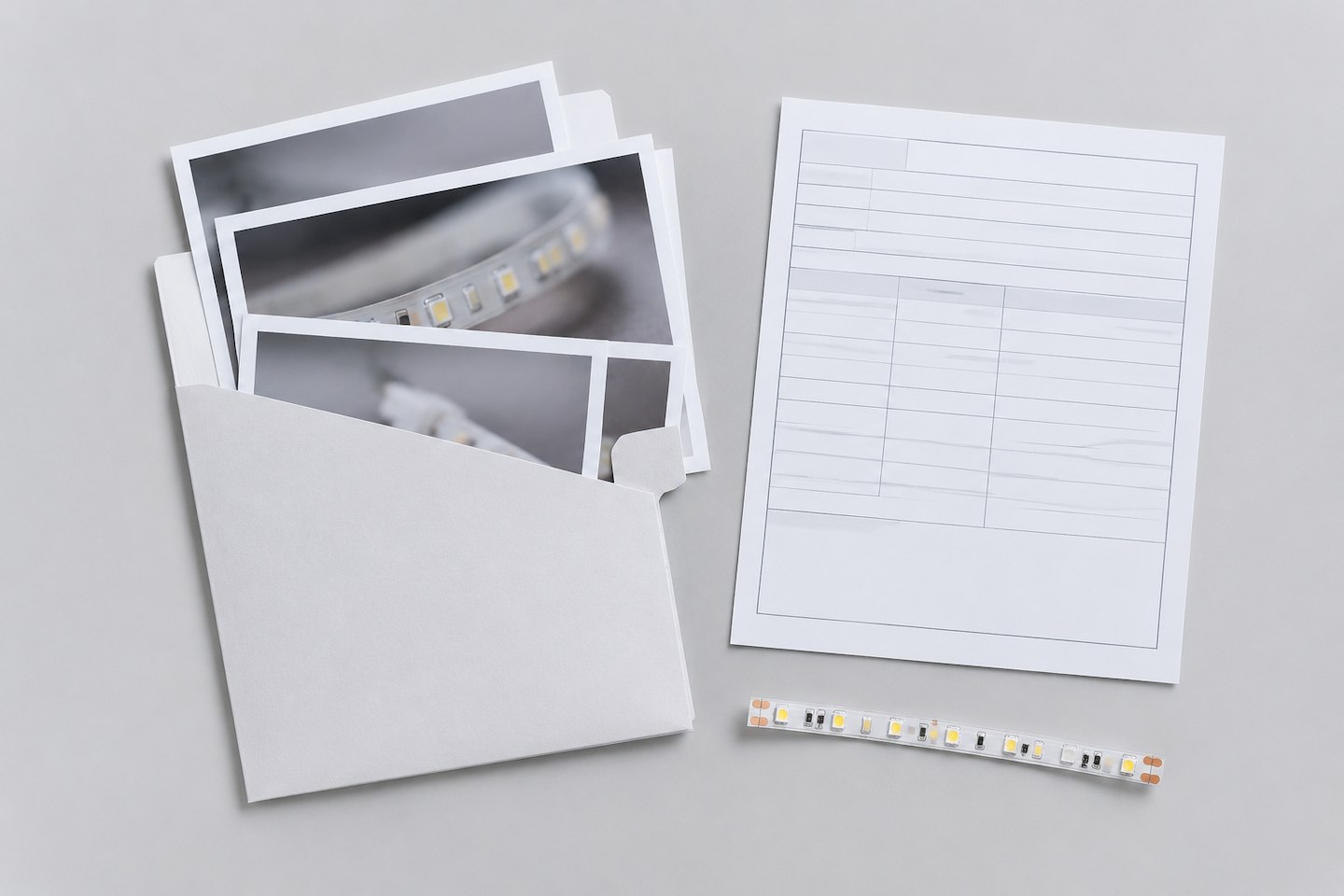
Assemble the symptom, product identity, power/control setup, and environment records into one submission, and present them as observed facts rather than as a stated root cause.
- Avoid definitive cause statements ("the driver is defective," "this is a manufacturing fault") unless they are confirmed by an actual teardown or test — state the symptom and let the warranty review determine cause.
- Avoid phrases that assume fault before the evidence is reviewed ("your product failed") in favor of a neutral description ("the following symptom was observed under the following conditions").
- Keep the affected product and any failed components available for inspection where feasible, rather than discarding or repairing them before the review is complete.
- Submit the complete evidence pack as one package rather than a partial report with details to follow, where possible.
A warranty review proceeds more efficiently from a complete, neutral evidence pack than from a conclusion asserted without the supporting record.
Replace vague requests with evaluable requirements
| Vague request | Why it causes rework | More evaluable wording |
|---|---|---|
| "It stopped working." | No symptom detail, scope or timing | Describe the precise symptom, affected scope, and when it was first observed |
| "The driver must be bad." | Asserts an unverified cause | Record the symptom and power/control setup; let the review determine cause |
| "Standard installation, nothing changed." | Assumes rather than confirms no relevant change | Explicitly check and record any recent change to wiring, power or environment |
| "We'll send photos later." | Delays evidence that may degrade after a repair attempt | Capture photographs and preserve the affected product before any repair |
Keep the investigation separate from the repair decision
Decide, before any repair work begins, whether the affected section will be preserved for warranty evidence or repaired for operational continuity — these are two different priorities that can conflict.
- If the installation's function is urgent (a commercial space that cannot stay dark), document and photograph the affected section as thoroughly as possible before any repair, then proceed with the repair and submit the evidence pack separately.
- If preserving the original evidence is feasible without unacceptable downtime, keep the failed component intact and available for potential inspection rather than discarding it once a temporary fix is in place.
- Record which path was taken (preserved before repair, or repaired first with prior documentation) as part of the evidence pack itself, so the warranty review understands what evidence is and is not still available.
- Avoid repairing and then describing the original condition from memory alone — a repair performed before documentation is complete often loses details that would have been visible in the original state.
Making this trade-off explicit, rather than defaulting to an immediate repair without documentation, keeps the evidence pack as complete as the operational situation allows.
When the symptom, product identity, power/control setup, environment and preservation approach are documented, Submit an Application Brief. Include the symptom description, product identity and batch reference, power/control setup, and supporting photographs. The inquiry begins a warranty and scope review for the stated case; root cause, coverage and resolution are determined in that review, not by this guide.
Bring the comparison into a project brief.
Share the documented requirements and unresolved questions. An inquiry begins review; it does not confirm engineering approval, compatibility, stock, price, lead time, compliance or an order.
Prepare a project brief